34J to 42J: Finding the Right Band for Your J Cup
A 34J and a 42J share a cup letter and very little else. Eight inches of band separate them, and that difference changes how the bra is built, how it sits, and which sizes will actually work when your first choice is unavailable.
Why the band matters as much as the cup
The band is the number, and it does most of the work. A properly fitted band carries the large majority of the weight, leaving the straps to steady rather than to hold. When the band is too loose, that load transfers straight to the shoulders, which is where grooves, aches and end-of-day fatigue come from.
This matters more as the cup letter climbs. At a J cup there is simply more weight in the system, so a band that would pass as acceptable at a smaller size fails outright here. The most common fitting error in this range is a band that is a size too generous paired with a cup that is a size too small — it feels comfortable in the fitting room and gives out within hours.
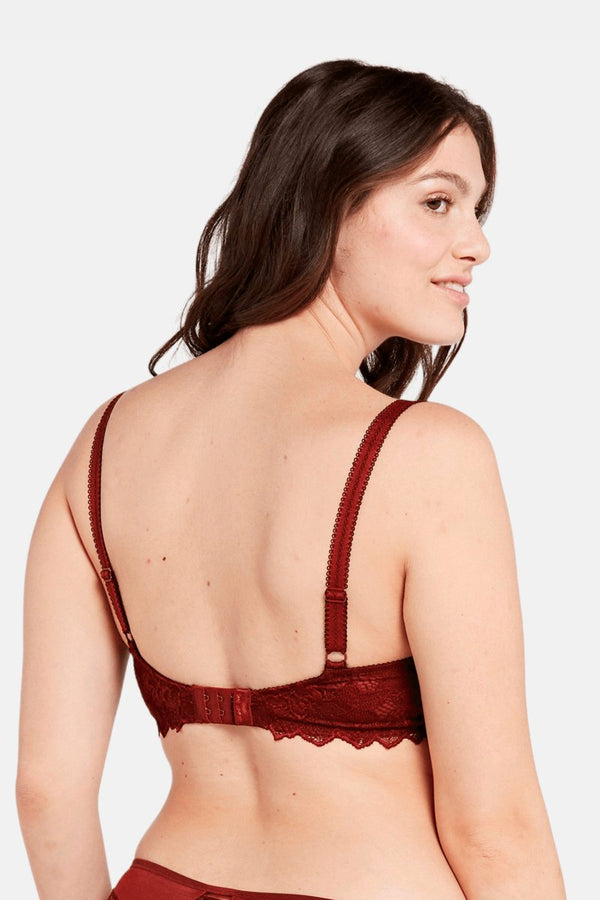
The band should sit level all the way around, parallel to the floor, and stay put when you raise your arms. If it rides up at the back, that is the band talking, not the straps.
What changes from 34J to 42J
Each step up the band scale adds width across the ribcage and volume in the cup, even though the letter stays fixed. That has practical consequences for which styles suit you.
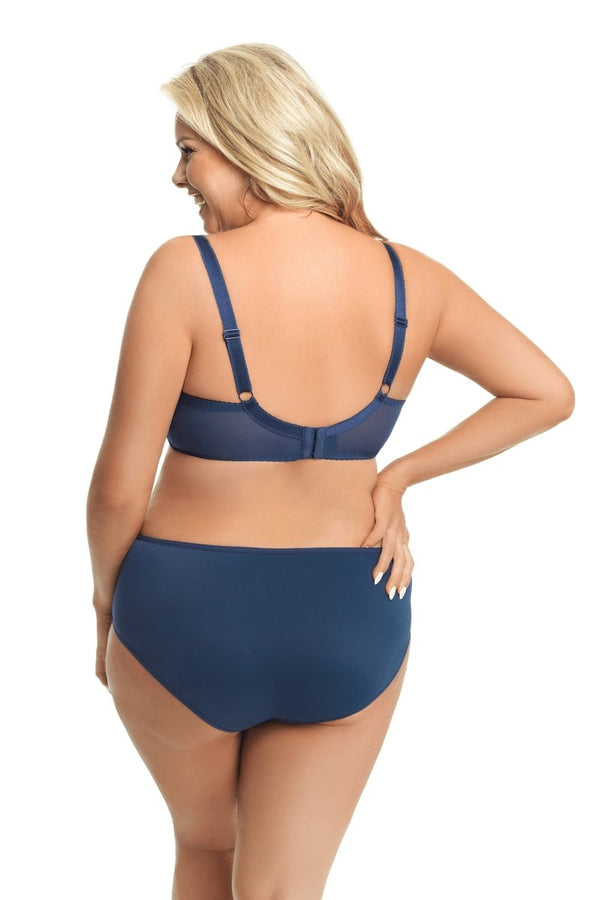
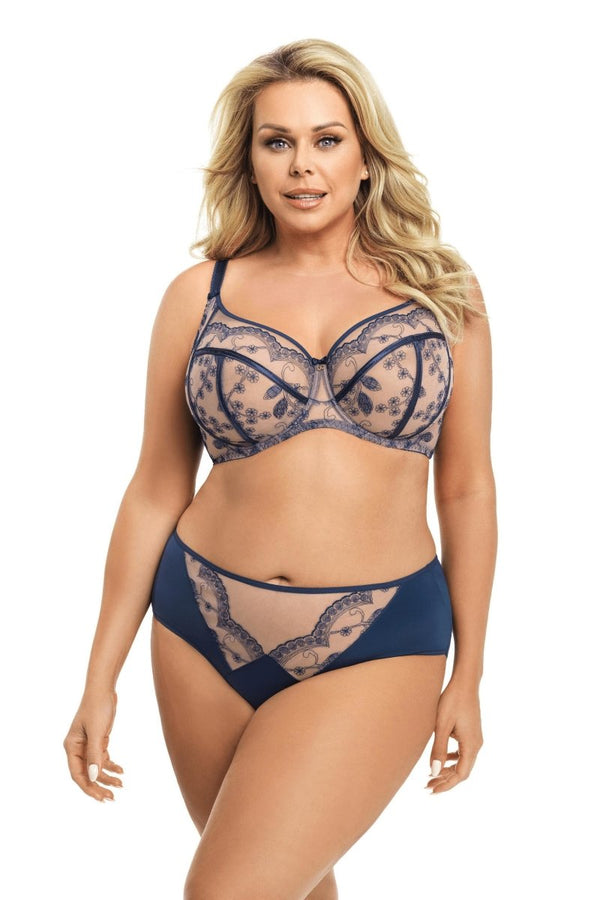
At 34J and 36J, you have a narrow frame carrying a lot of volume. Projection is pronounced, the wire needs to be genuinely narrow to follow the breast root without spreading outward, and side support does a disproportionate amount of the work. The Luna in navy is built along those lines.
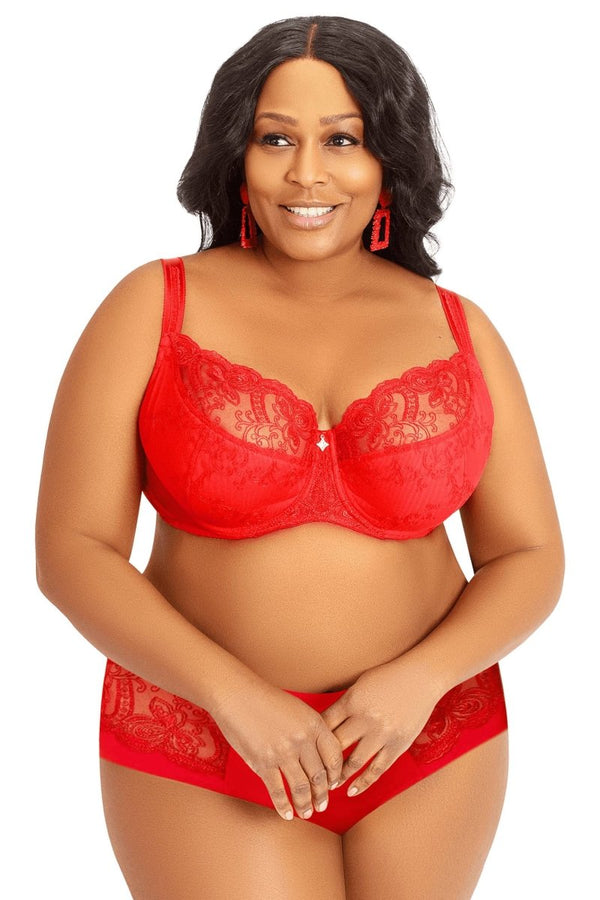
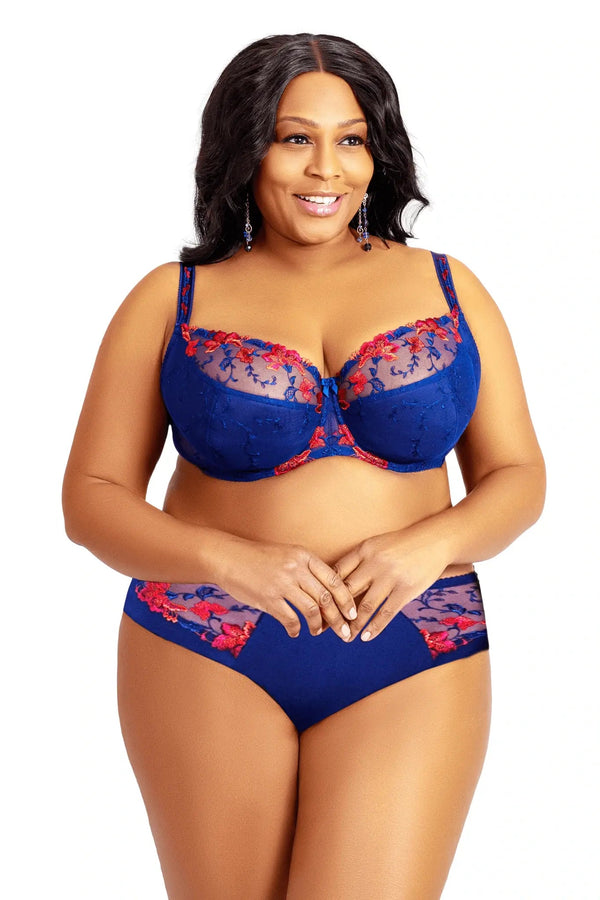
At 38J and 40J, the volume distributes across a wider root. Cup depth still matters, but the balance shifts toward band strength and panel reinforcement, because there is more length of band to keep firm. The Bella in black and red handles that combination well.
At 42J, band construction becomes the deciding factor. A longer band stretches more over a day, so it needs a firmer weave, more hooks, and properly anchored side panels to hold its shape from morning to evening.

Your sister sizes, band by band
A sister size is a different label for the same cup volume. Go up one band and down one cup, and the volume holds. Go down one band and up one cup, and the same applies in reverse. This is the single most useful thing to know when your exact size is out of stock, because the equivalent is frequently sitting right beside it under another name..







Across the J range, the equivalents work out like this:
- 34J — equivalent to a 36I or a 32K
- 36J — equivalent to a 38I or a 34K
- 38J — equivalent to a 40I or a 36K
- 40J — equivalent to a 42I or a 38K
- 42J — equivalent to a 44I or a 40K
Two caveats worth holding on to. Sister sizes match on volume, not on feel — a looser band with a smaller cup will sit differently against your body even though the cup holds the same amount, so treat them as alternatives rather than exact duplicates. And European and US labels do not always align, which is another reason a size that seemed unavailable may exist under a different name.
Our bra sizing chart and calculator maps all of this against your own measurements in a couple of minutes.
Checking whether your band is right
Four quick checks settle it, and none of them need a fitting room.
- Fasten on the loosest hook first. A new band should fit on the outermost row, leaving the tighter hooks for later as the elastic relaxes. If you need the tightest hook on day one, the band is too big.
- Check it stays level. Raise your arms above your head. If the band travels up your back, it is not gripping and the straps are compensating.
- Look at the centre gore. It should rest flat against your sternum. Floating away usually means the cup is too small rather than the band being wrong, which is why the two are so often misdiagnosed together.
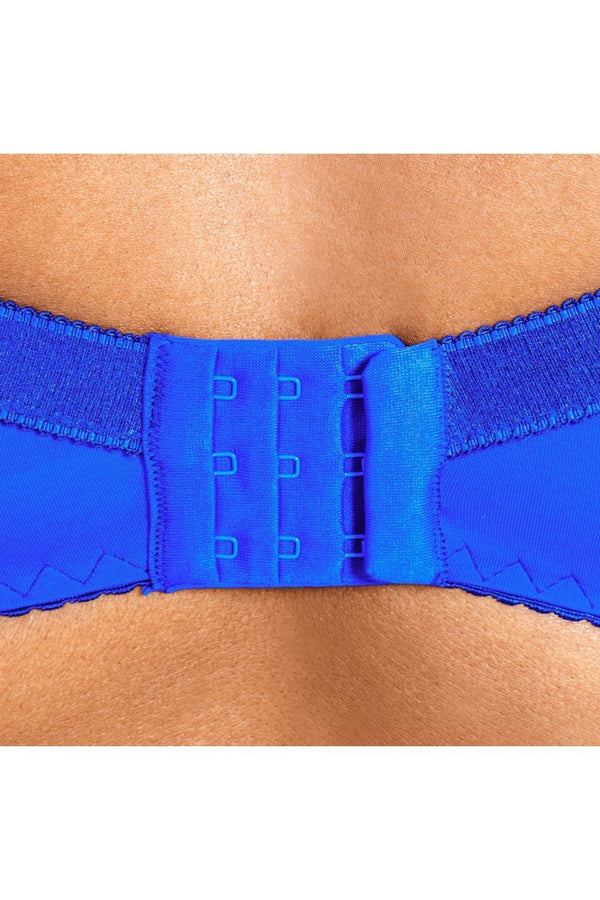
- Count the hooks. Longer bands need more of them. Three or four rows are normal in this range, and too few will undermine an otherwise well-made bra.
Re-measure every six months or so. Weight, hormones, medication and age all shift the band before they shift the cup, which is why a bra that fit well last year can feel wrong now without any obvious change.

Where to find your size
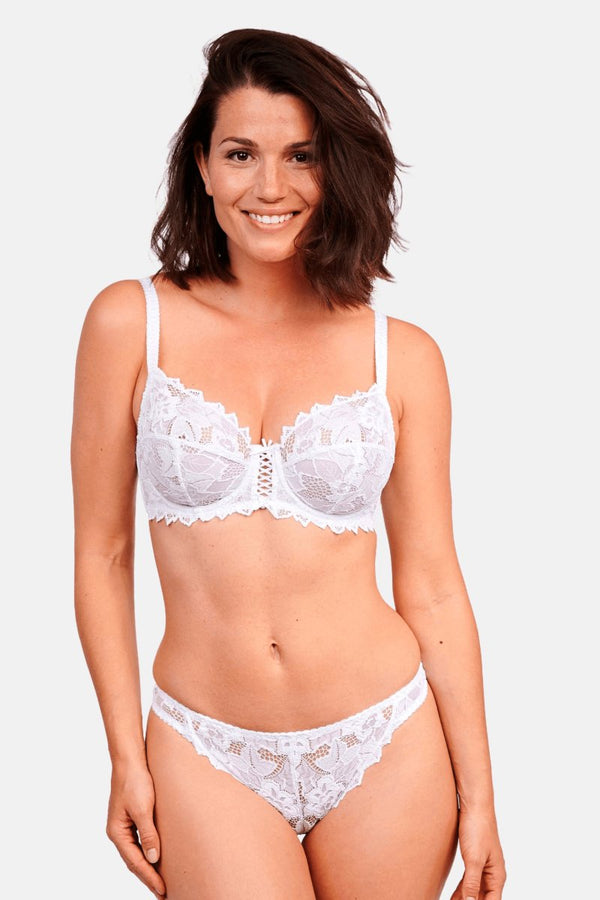
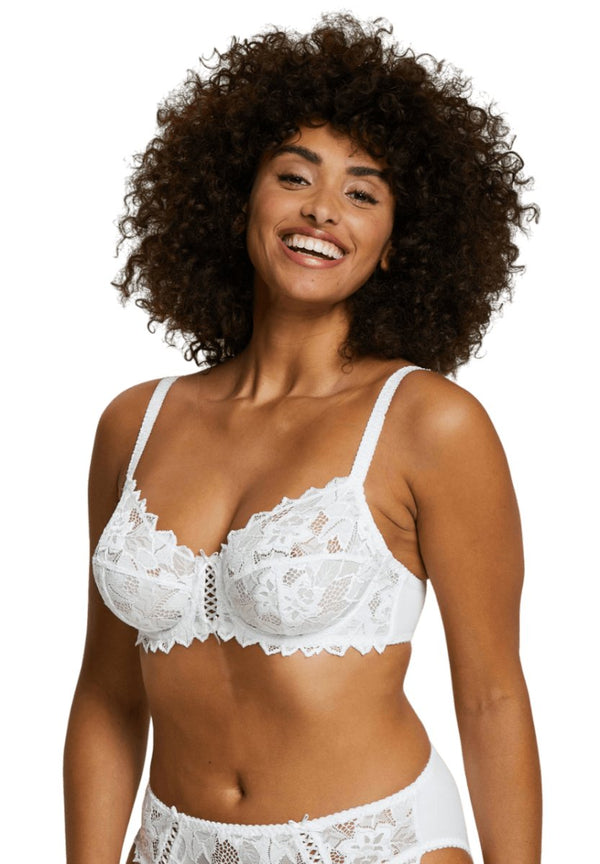
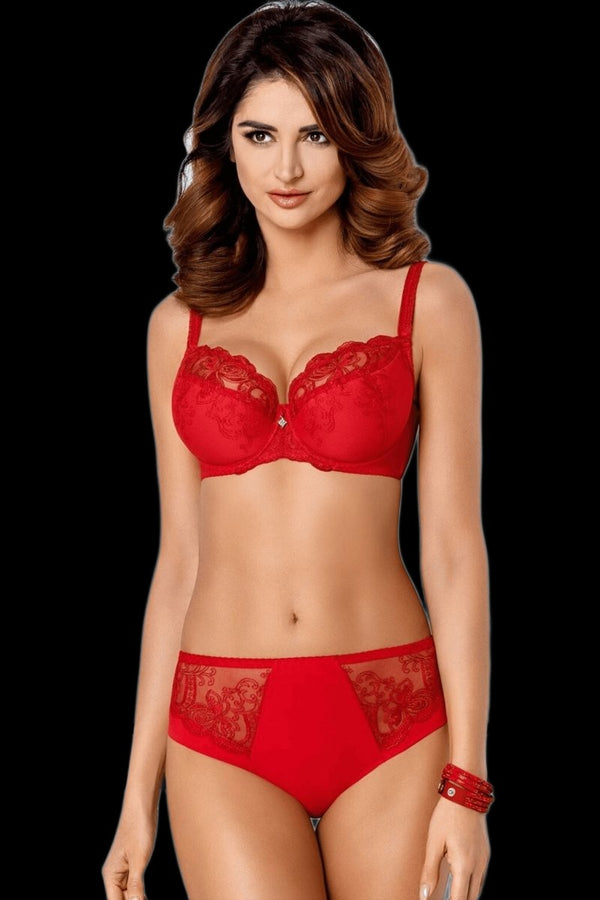
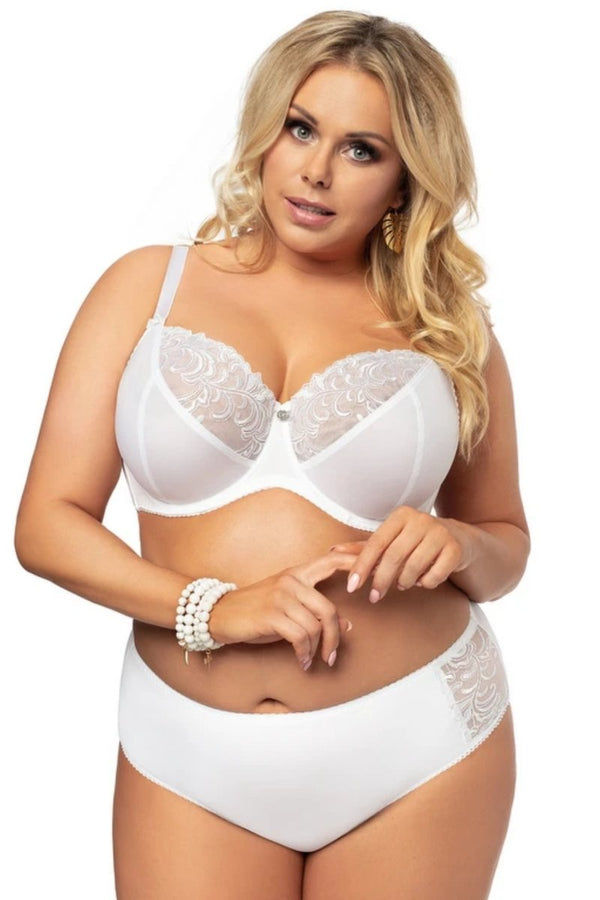
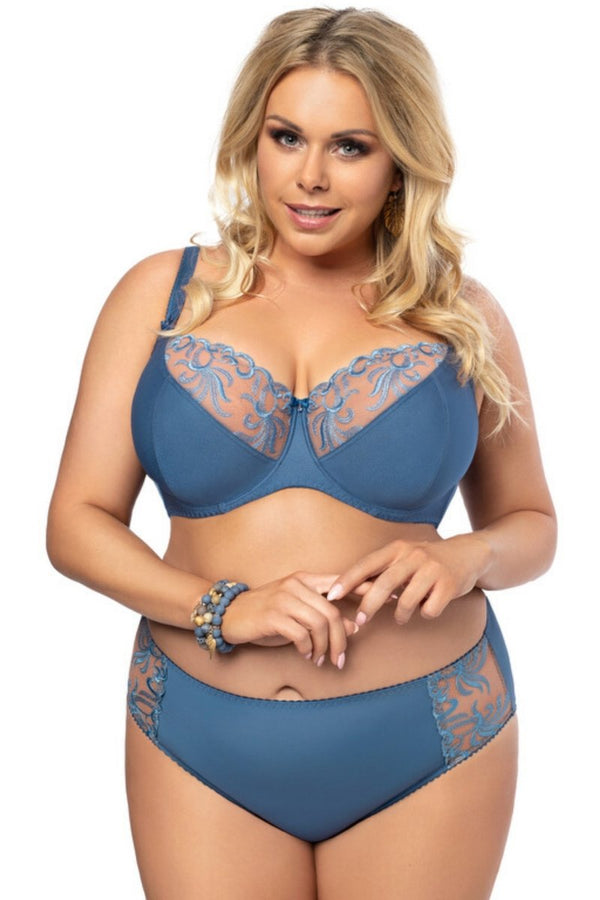
Most department stores stop well before this range, which is why searching locally so often comes up empty. Shopping with a specialist gives you full size runs rather than a token style in one band, and the white lace bra in large cups and the Salma set in red are examples of what that actually looks like in practice.
Fit Au Max carries Polish and French bras built for fuller busts from Gorsenia, WiesMANN, Sans Complexe and Nessa — drafted for extended bands and cups from the first pattern rather than scaled up from a standard one.
If your band and cup combination is not showing on the site, we can often source it. Our custom order service starts with two measurements and commits you to nothing, and a free bra sizing consultation is there if you would rather talk it through. Free shipping on orders $75+.