G Cup Size: What It Means, Sister Sizes, and How to Find Your Fit
A G cup isn't one fixed shape or size — it's a cup volume that shifts depending on which brand, which country, and which band it's paired with. Understanding how that works is the fastest way to stop guessing and start buying bras that actually fit, instead of replacing the same wrong size over and over.

What a G cup actually is
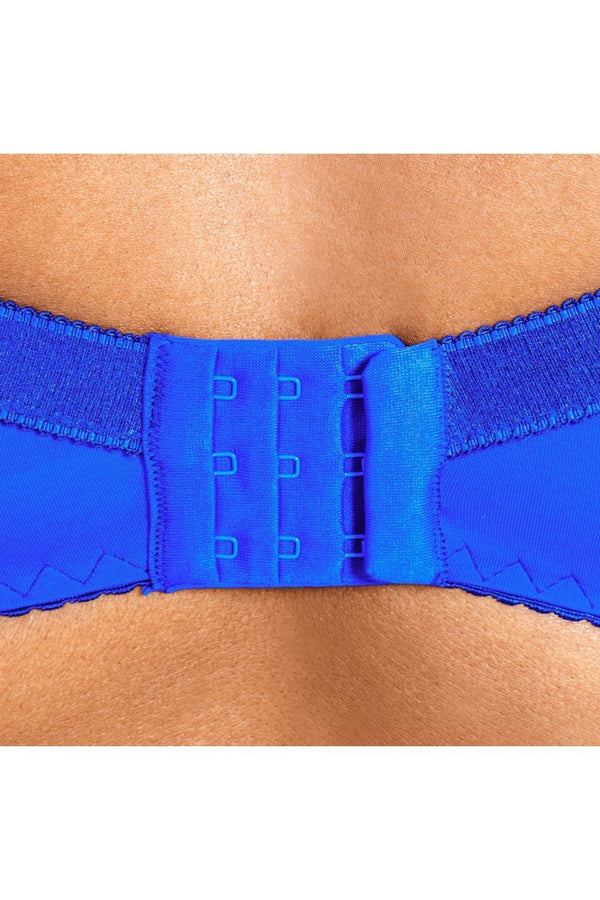
First, a fact worth knowing: G cup is not the largest bra size that exists. Well-made bras go well beyond it — H cup, I, J, K and further — and at every one of those sizes, construction matters more than the label does. A properly engineered G cup bra needs a wider underwire, reinforced side panels, and precise stitching that a standard bra simply was never built with. The gap between a mass-market G cup and one made specifically for it is not subtle, and it shows up fastest in the places a standard bra fails first: the underwire edge, the strap seam, and the band after a full day of wear.
A heavier, fuller bust puts real, ongoing strain on the back, shoulders, and posture — this isn't cosmetic, it's mechanical. A bra engineered for that weight distributes it properly: sturdy side panels take pressure off the band, wide straps spread the load across the shoulder instead of concentrating it, and a well-cut cup keeps the bust close to the body instead of letting it pull forward. The right G cup bra changes how you carry yourself by the end of the day, not just how you look at 8am.
But none of that matters if the size itself is wrong. A perfectly engineered bra in the wrong size will still dig, gap, or ride up — which is exactly why so many women who've "tried everything" haven't actually tried their real size yet. That's where sister sizes come in.
How sister sizing works
A sister size is a different label for the exact same cup volume. European makers — including the Polish and French brands we carry — sometimes size that same volume differently than a US label would, which is one reason a first-time European bra purchase can feel confusing even when the fit turns out to be exactly right.
The rule itself is simple, even if it takes a moment to click: go up a band size, go down a cup size, and the cup volume stays exactly the same. Go down a band, go up a cup — same result in the other direction. It sounds counterintuitive at first because most people assume the cup letter alone determines size, when really it's the relationship between band and cup that determines volume..


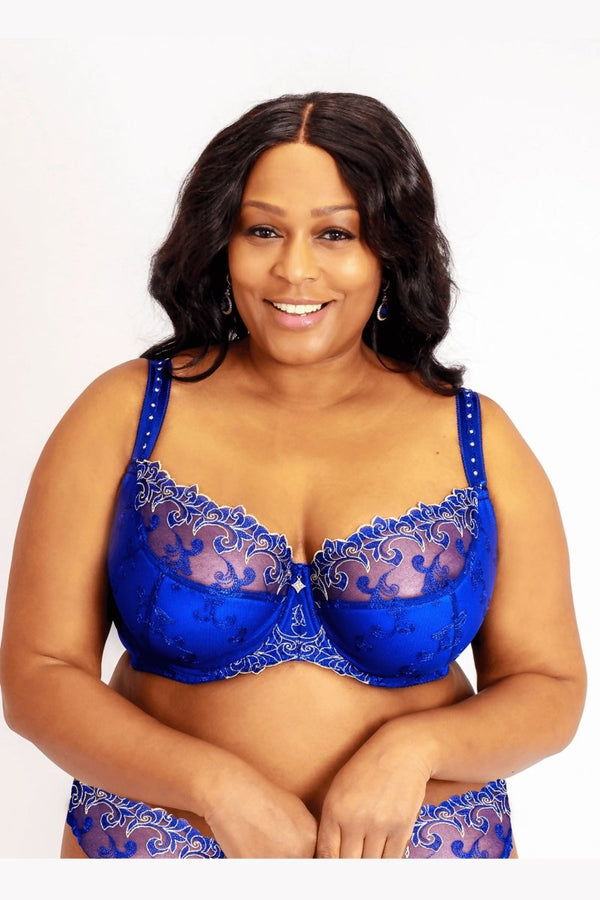


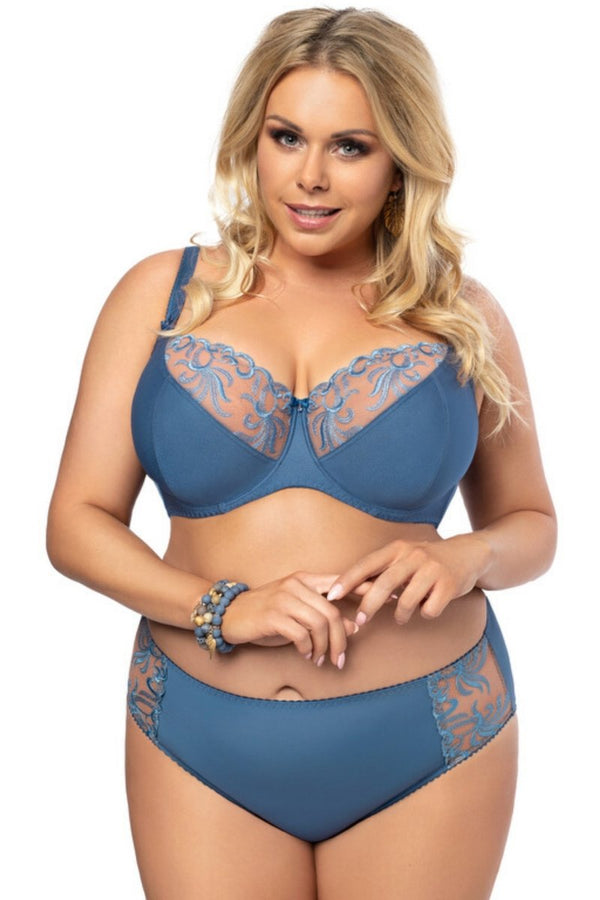



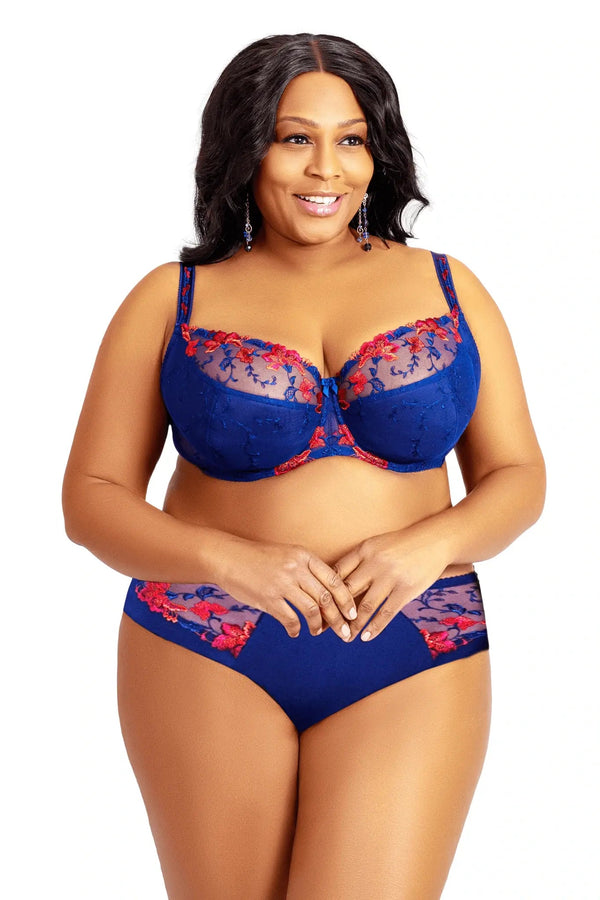
In practice: a 40G and a 42F hold the same volume. A 40F and a 40DDD do too — and both of those are also equivalent to a 42E and a 42DD. That's four different labels, all describing the same physical fit. If your exact size is ever out of stock, or if a particular brand simply doesn't offer it, the sister size sitting right next to it is very often the answer.
This matters even more once you start shopping across brands and countries, since a G cup at one label may run slightly differently than a G cup at another. Once you know your sister sizes, you're no longer limited to the one exact label — you have a small range of equivalent options to check against.
Finding your fit
Your size isn't fixed. Weight changes, hormones, medication, and age all move it — sometimes gradually, sometimes suddenly — so a fit that was correct two years ago may not be correct now, even if nothing else about your wardrobe has changed.
- Use a sizing chart before you order. Our bra sizing chart and calculator converts your measurements into sister sizes across brands and sizing systems. It's worth two minutes, especially the first time you buy a European brand, since guessing based on a US label alone is the most common reason a first European bra doesn't fit.
- Re-measure roughly every six months. A bra that no longer matches your actual size isn't doing its job, however well it was made — and most people underestimate how much a measurement can shift in six months. Re-measuring isn't just for after a major life change; it's routine maintenance.
- Let the band guide you, not the cup. If a band runs tight, resist the urge to just go up a full size. Instead, size up one band and down one cup to land on the exact same volume you already know fits — a snug 36G often becomes a comfortable 38F, not a loose 38G.
- Don't assume one bad experience means the size is wrong. Sometimes it's the specific cut, not the size — a plunge style and a full-coverage style in the same numeric size can fit differently depending on how the cup is constructed.
A few things worth knowing
Beyond the mechanics of sizing, there are a handful of things worth knowing before you shop:
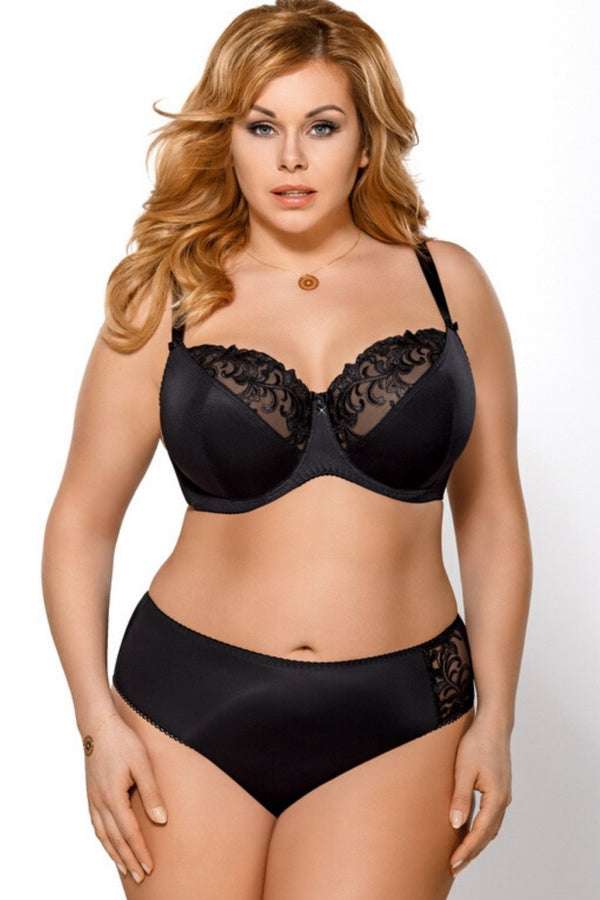
- Underwire width matters more than most people realize. A narrow underwire compresses breast tissue instead of supporting it — it can make a fuller bust look smaller while feeling considerably worse. Look for an underwire that spans the full width of the breast, like the black and silver Giselle, rather than one that cuts in at the sides.
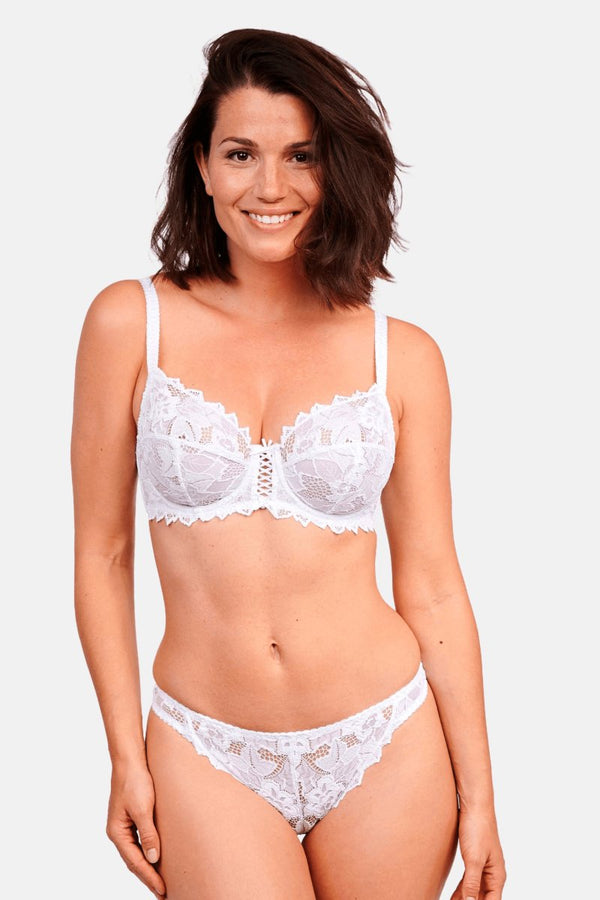
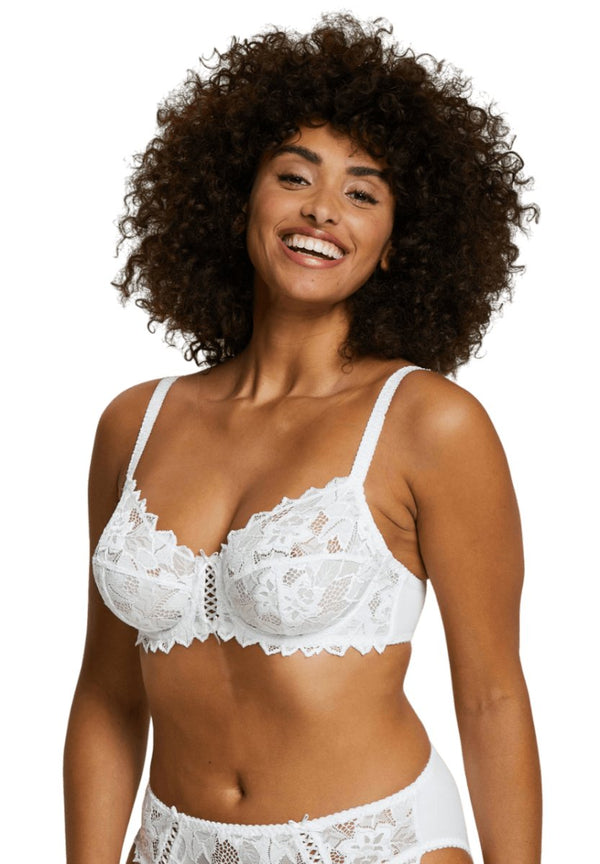
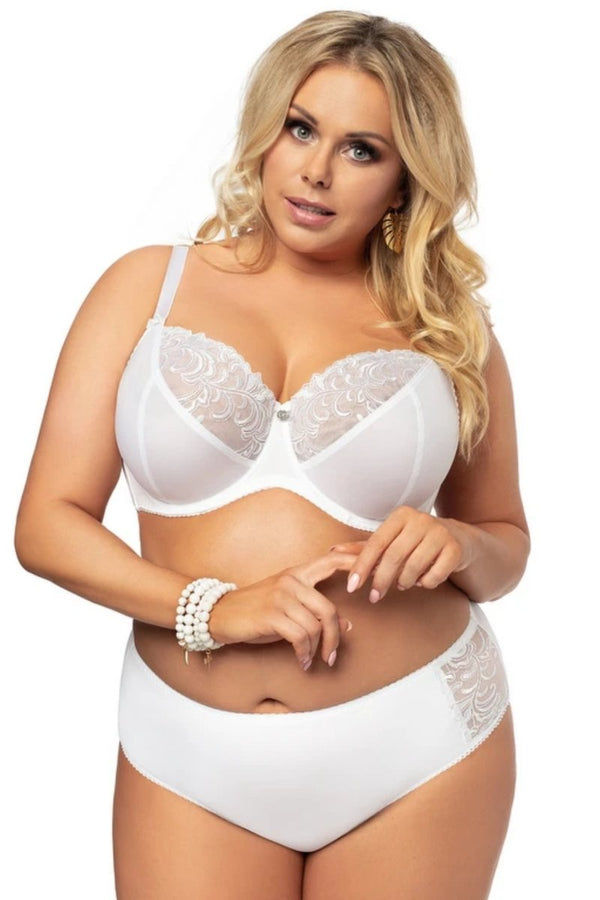
- Support and style aren't a trade-off. The white and silver Giselle is proof of that — lace detailing on a properly engineered G cup bra isn't a decorative afterthought bolted onto a plain bra, it's built in from the initial design.
- Most mainstream retailers stop around a DDD. If you've struggled to find your size at a department store or a big-box website, that's an inventory gap on their end, not a fit problem on yours. Specialty retailers exist precisely because mainstream brands stop short of sizes real women actually need.
- Full coverage cups reduce spillover and bounce. They also give a cleaner line under fitted tops and everyday clothing, which matters more at a G cup than it does at a smaller size, where a plunge or demi cut has more margin for error.
- Your bra wardrobe should include more than one style. A full coverage bra for everyday wear, something with a bit more shape for going out, and a t-shirt bra for under fitted clothing all solve slightly different problems — one bra rarely does everything well at this size.
For more on what to look for structurally in any of these — underwire, gore, straps, cup construction — see the parts of a bra.
Shop G cup bras built for this
Fit Au Max carries Polish and French bras in D through L cup, from makers including Gorsenia, WiesMANN, Sans Complexe and Nessa — built specifically for fuller busts rather than upsized from a standard pattern. Free shipping on orders $75+.