Find your Best Underwire Bras for Large Breasts | Ultimate Guide
The Truth About Underwire Bras for Large Breasts — What to Look for and Why It Matters
If you have a larger bust and you've spent years cycling through underwire bras that dig, shift, stretch out, or simply fail to hold you up by midday — the problem is almost certainly not you. It's the bra. Most underwire bras on the market are not engineered for larger cup sizes. They are standard bras with a larger label. The difference matters enormously, and once you understand what a properly built underwire bra actually looks like, you'll never go back to guessing.
Why Underwire Bras Matter for Larger Busts
For women with D cup and beyond, an underwire bra is not optional — it's structural. The underwire does something a wireless bra fundamentally cannot: it creates a defined base that lifts breast tissue up and away from the body, holds that position throughout the day, and distributes weight across the chest rather than letting it pull downward.
Without that foundation, larger breasts sit lower, pull forward, and place constant strain on the shoulders, upper back, and neck. Over time, that strain becomes chronic discomfort that many women simply normalize — not realizing that the right bra would eliminate most of it.
A properly fitted underwire bra does four things simultaneously: lifts, shapes, supports, and stays put. When all four are working, the difference is physical and immediate.
Understanding Bra Styles for Larger Busts
Not all underwire bras work the same way. The three most important styles to understand are:
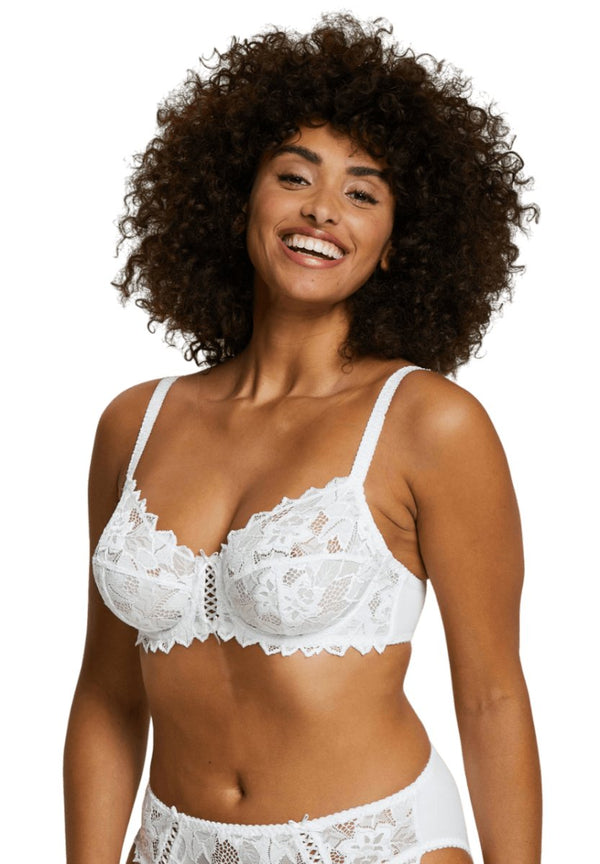
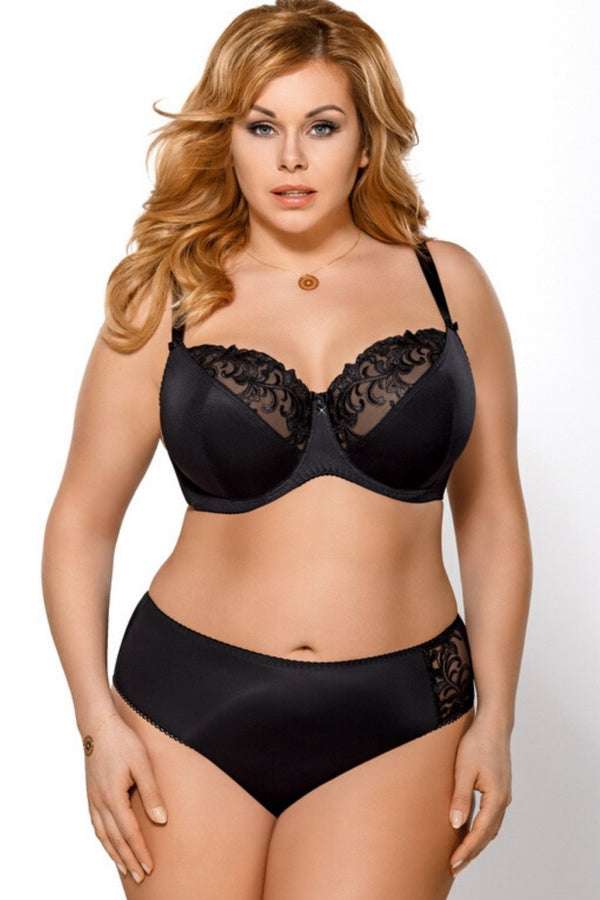
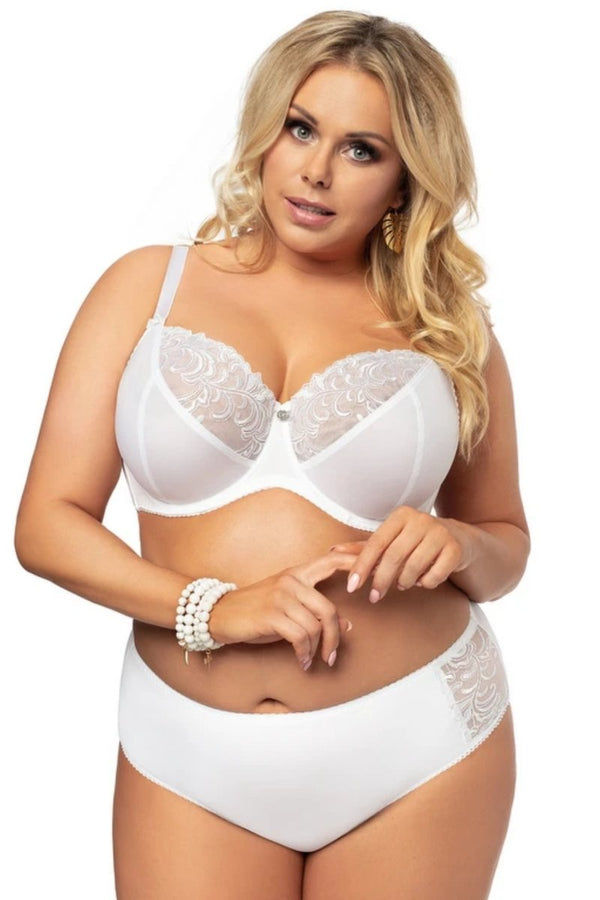
Full-Coverage Bra The workhorse of the fuller bust wardrobe. Full coverage bras encapsulate the entire breast, with a higher neckline, wider side panels, and maximum containment. They are the most supportive option for everyday wear and the best choice for women who need all-day comfort under any outfit.
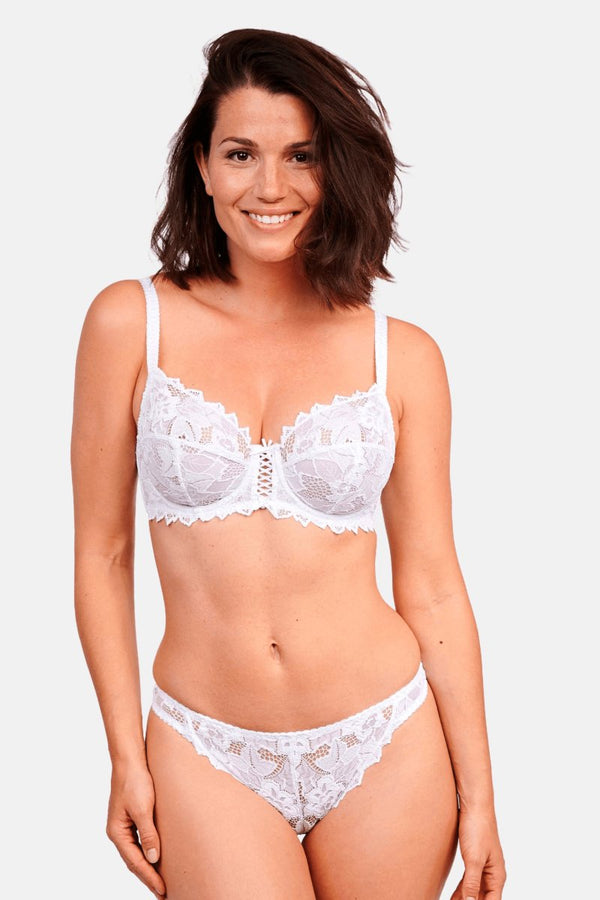
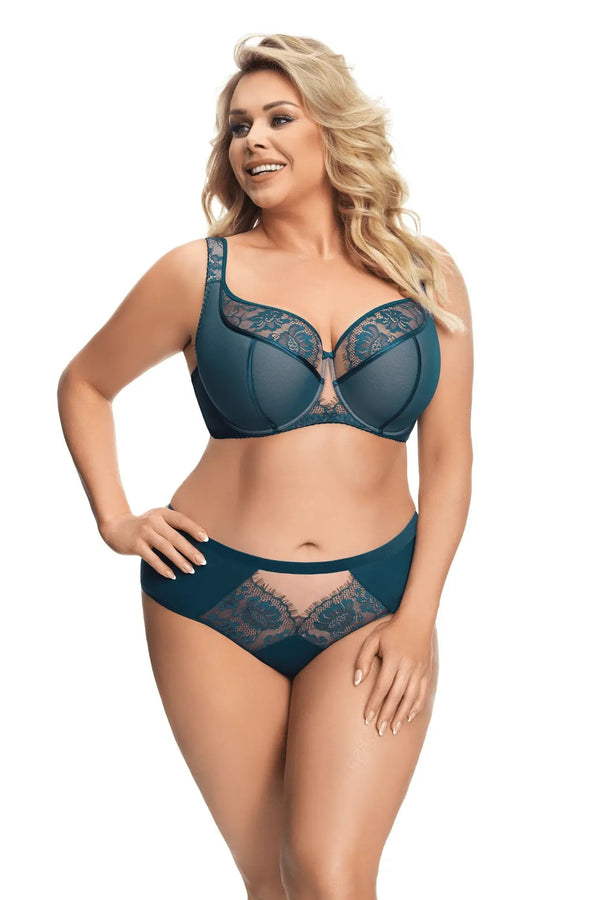
Plunge Bras Designed for lower necklines, plunge bras have a deep V center and lower cup edges. Many women with fuller busts assume plunge bras won't work for them — but a well-engineered plunge bra built specifically for larger cups absolutely can. The key word is engineered. A standard plunge bra scaled up will fail. A plunge bra designed from the ground up for a fuller bust will not.
Balconette Bras A horizontal cup seam creates a lifted, rounded shape with a more open neckline than full coverage. Balconette bras are excellent for women who want a defined silhouette with slightly less coverage — and they work beautifully under square and wide

What Makes an Underwire Bra Actually Supportive
This is where most bras fail larger-busted women. The features that determine whether an underwire bra truly supports you are specific and non-negotiable:
Underwire shape and span. The underwire must follow the full natural curve of your breast — not a smaller, narrower approximation of it. An underwire that doesn't span your full breast width compresses tissue from the sides, causing discomfort and creating an unnatural shape. Premium European bras use underwires shaped specifically for fuller cup volumes.
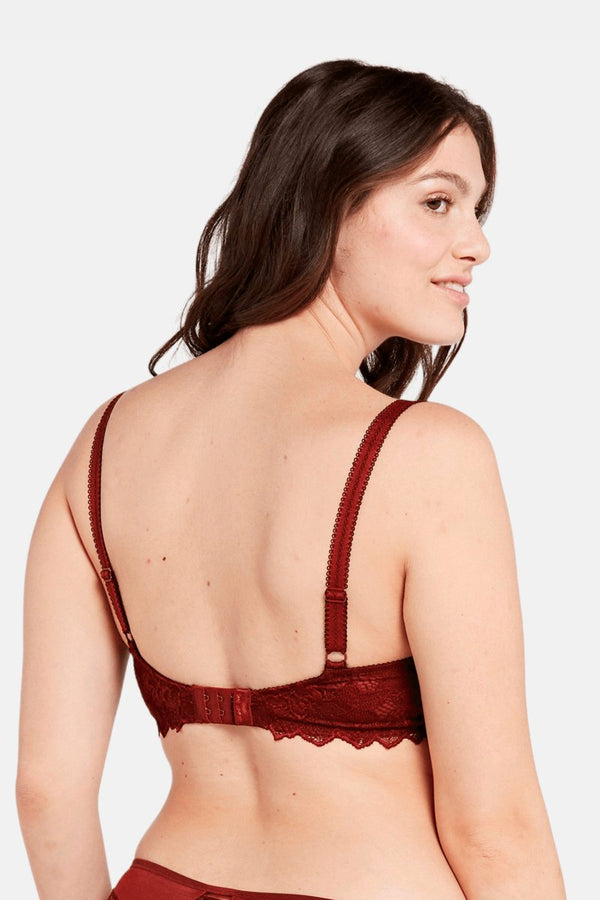
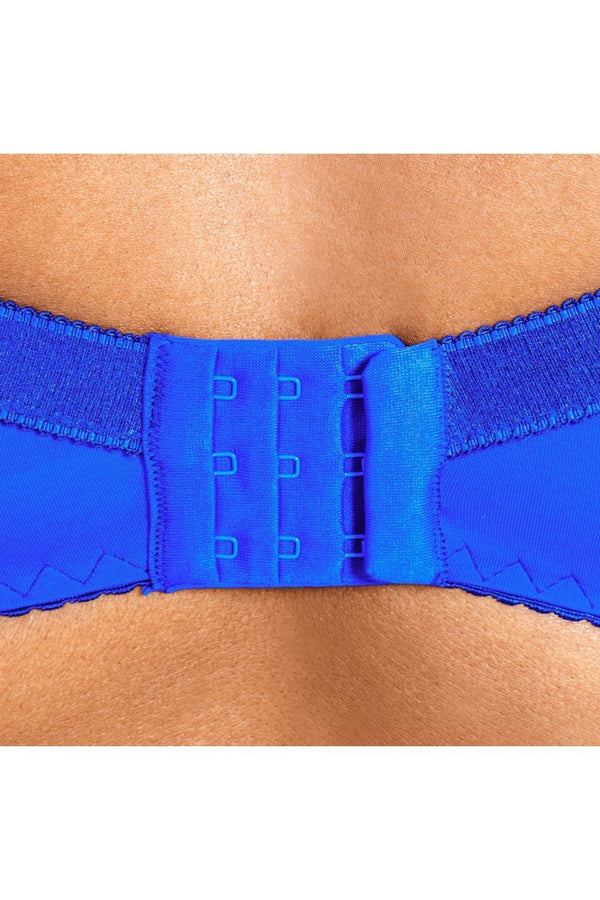
Band strength. The band is the foundation of your bra's support system. It should provide approximately 80% of the lift and containment — not the straps. A band that stretches, rides up, or digs in unevenly is failing at its primary job. Look for firm, non-stretch band construction that lies parallel to the ground all the way around.
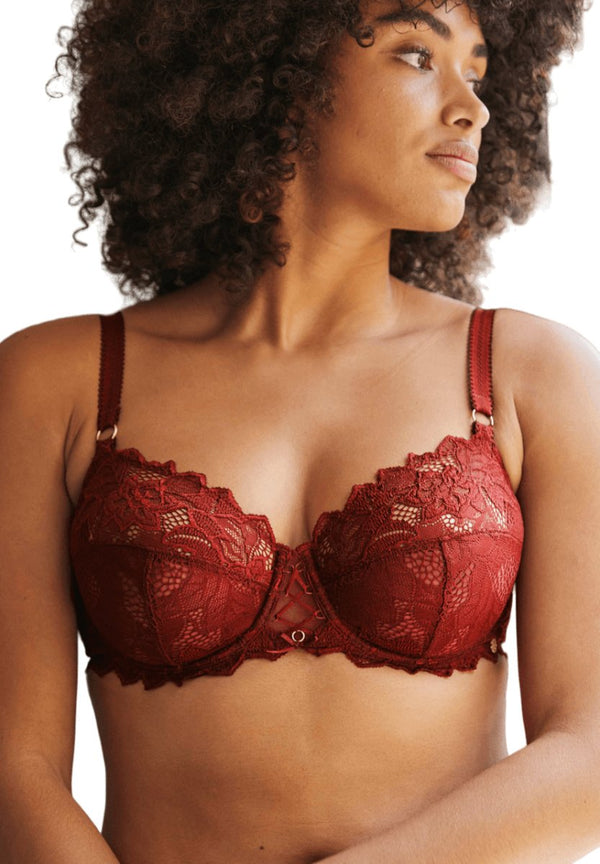
Cup construction. Multi-part cups — typically three panels — distribute breast tissue more evenly than a single-piece cup, creating a lifted, separated, natural shape. Single-piece cups flatten or push tissue together rather than shaping it.
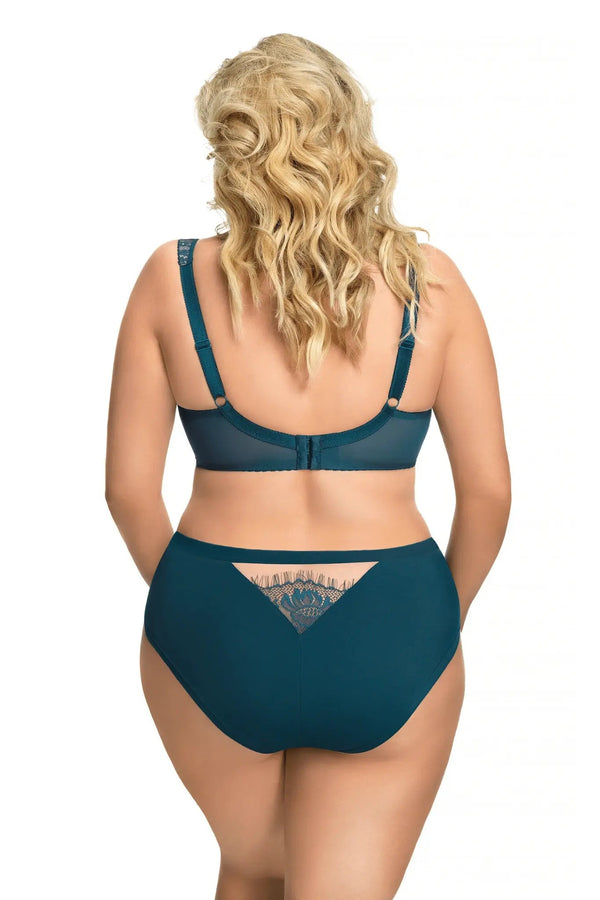
Side panels. Wide, reinforced side panels anchor the bra laterally and prevent breast tissue from migrating toward the underarm. Without them, even a well-made bra will shift and lose its shape throughout the day..


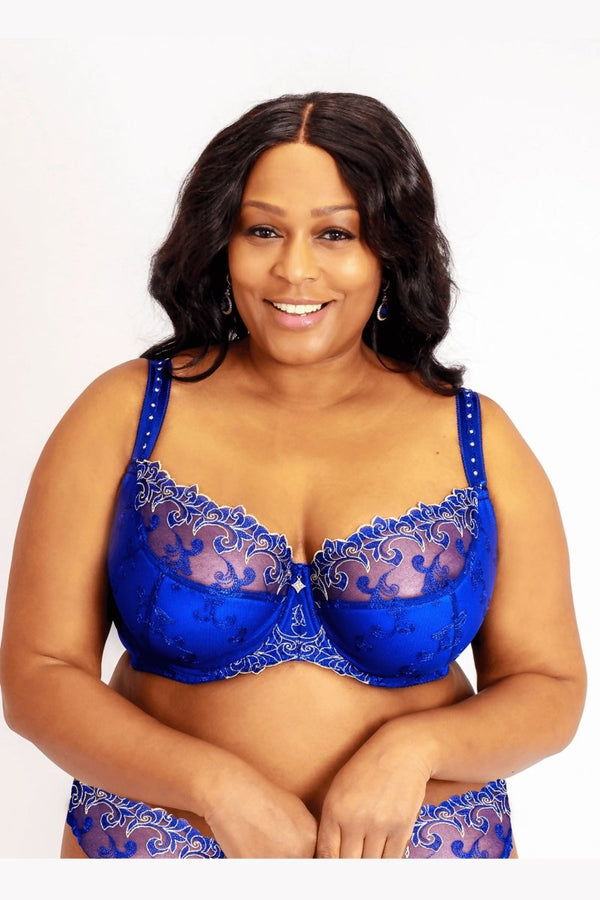


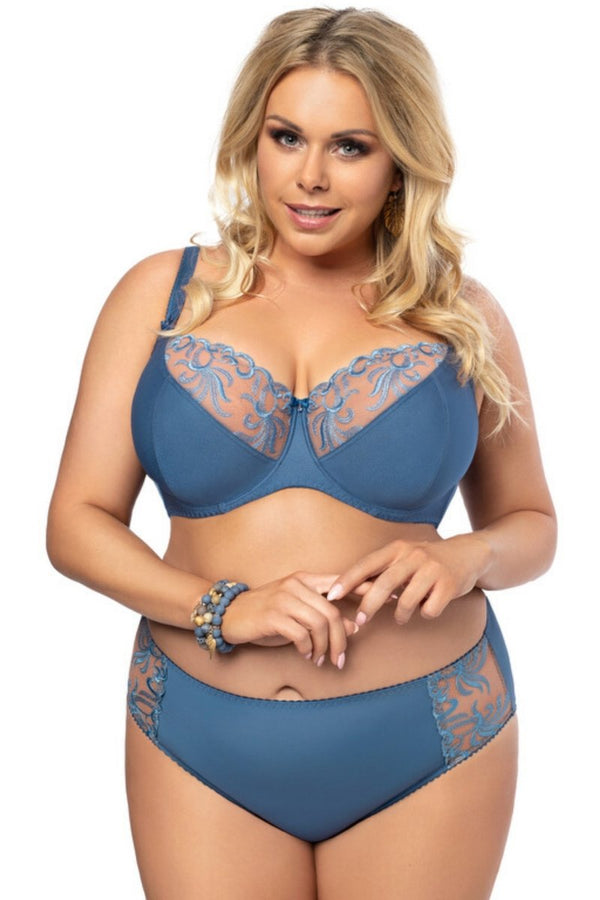



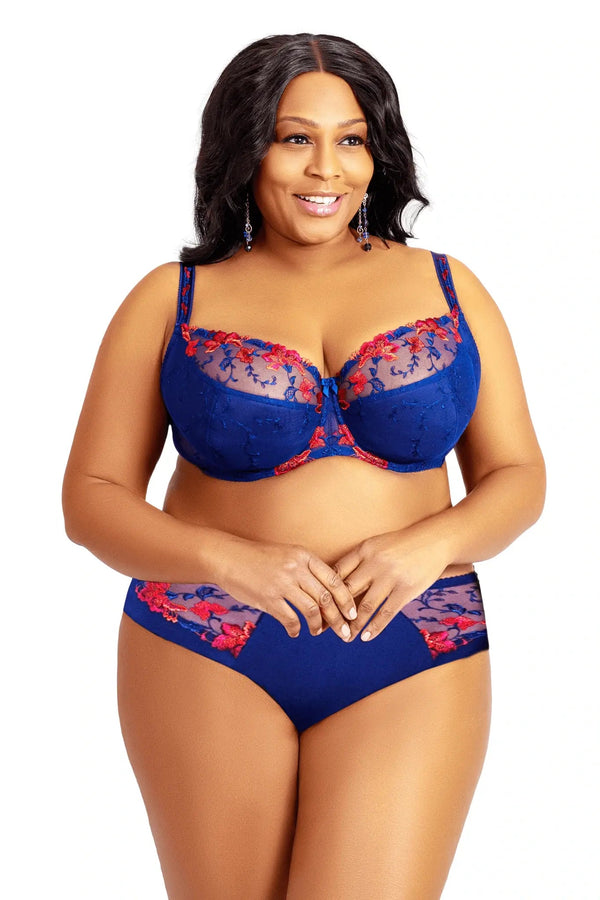
Strap width and placement. Wide straps distribute weight across a broader area of the shoulder, dramatically reducing the digging and soreness that narrow straps cause on larger busts. Adjustable straps are essential — but remember, the straps should fine-tune the fit, not carry the weight.
How to Measure Your Bra Size Accurately
Wearing the wrong size is the single most common reason women with larger busts are uncomfortable. Sizes shift with weight changes, hormonal fluctuations, pregnancy, and age — often without women realizing it.
To measure correctly:
- Band size: Wrap a soft tape measure around your ribcage, directly under your bust. Keep it snug and level. Round to the nearest even number.
- Bust size: Measure around the fullest part of your bust, keeping the tape parallel to the floor.
- Cup size: Subtract your band measurement from your bust measurement. Each inch of difference corresponds to one cup size — 4 inches is a D cup, 5 is DD, 6 is DDD/F, 7 is G, 8 is H, and so on.
Always measure fresh before ordering from a new brand. European sizing — used by Polish and French makers — can differ from US sizing, and each brand's size chart should be consulted directly.
Re-measure every six months. It takes five minutes and it changes everything.
Common Fit Problems — and What They Actually Mean
If your bra is causing any of the following, here is what's really happening:
- Band rides up at the back — the band is too loose, or the cups are too small, pulling the band upward
- Straps dig into shoulders — the band is doing too little work, transferring load to the straps
- Underwire pokes at center or sides — the cup is too small, or the underwire shape doesn't match your breast
- Spillage over the top of the cup — cup is too small
- Wrinkles or gaps in the cup — cup is too large, or the style doesn't suit your breast shape
- Bra shifts throughout the day — band is too loose, or side panels are insufficient
None of these problems are permanent. They are fit and engineering problems with specific solutions.
 Caring for Your Underwire Bras
A high-quality underwire bra is an investment. Treat it like one.
- Hand wash in cool water with a gentle detergent. Machine washing — even on delicate — damages underwires, distorts cup shape, and degrades elastic far faster than hand washing
- Never wring or twist — press gently to remove water, then reshape the cups and lay flat to dry
- Store flat or cups-forward — never fold one cup inside the other, as this distorts the cup shape over time
- Rotate your bras — wearing the same bra two days in a row doesn't allow the elastic to recover fully. Three to four bras in regular rotation extends the life of each significantly
- Replace when the band stretches out — a stretched band means lost support, regardless of how good the rest of the bra looks
Why European Construction Makes the Difference
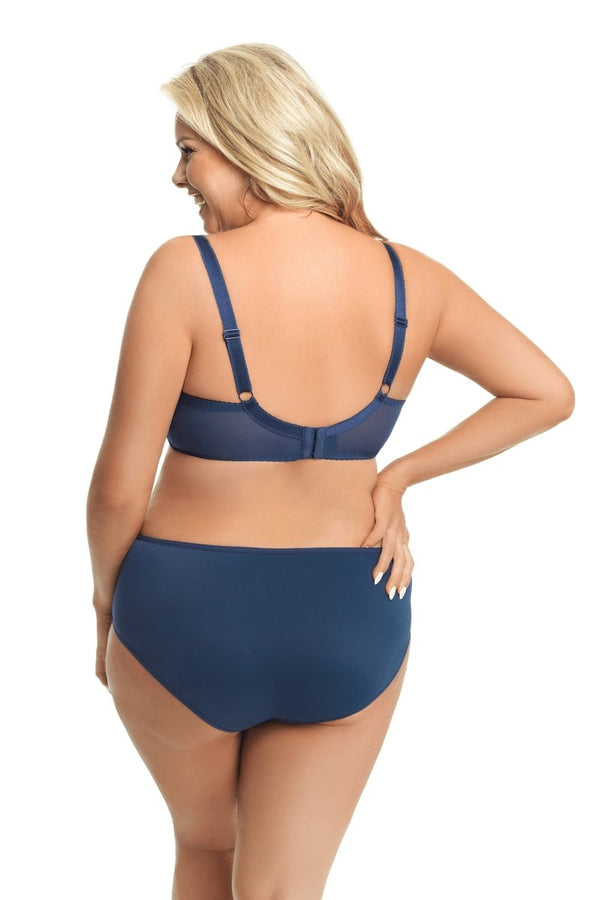
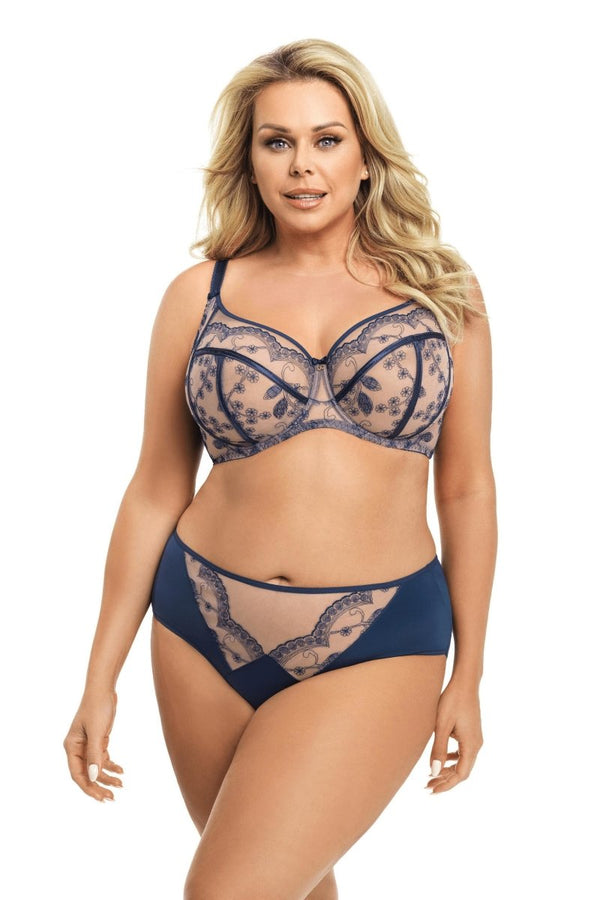
The underwire bras that consistently perform best for larger cup sizes come from European makers — particularly from Poland and France. Brands like Gorsenia and WiesMANN have spent decades engineering bras specifically for women with D through L cup sizes. Their bras are not standard designs scaled up. They are built from the beginning with fuller bust geometry in mind — wider underwires, stronger bands, multi-part cups, and reinforced side panels that hold their shape through years of wear.
Women who try these bras for the first time frequently describe it as the first time they've ever worn a bra that actually fits. That is not marketing. That is what proper engineering feels like.
Find Your Underwire Bra at Fit Au Max Lingerie
Fit Au Max Lingerie exists because too many women with larger busts were being underserved — not just in size availability, but in construction quality. Every bra in our collection is sourced from premium Polish and French makers, in sizes D through L cup, across full coverage, plunge, and balconette styles.
You deserve a bra that was built for your body. Not adapted for it. Built for it.
👉 Shop our Polish Bras for Fuller Busts — free shipping on orders $75+.